March 5, 1946
Winston Churchill Delivers the Iconic 'Iron Curtain' Speech
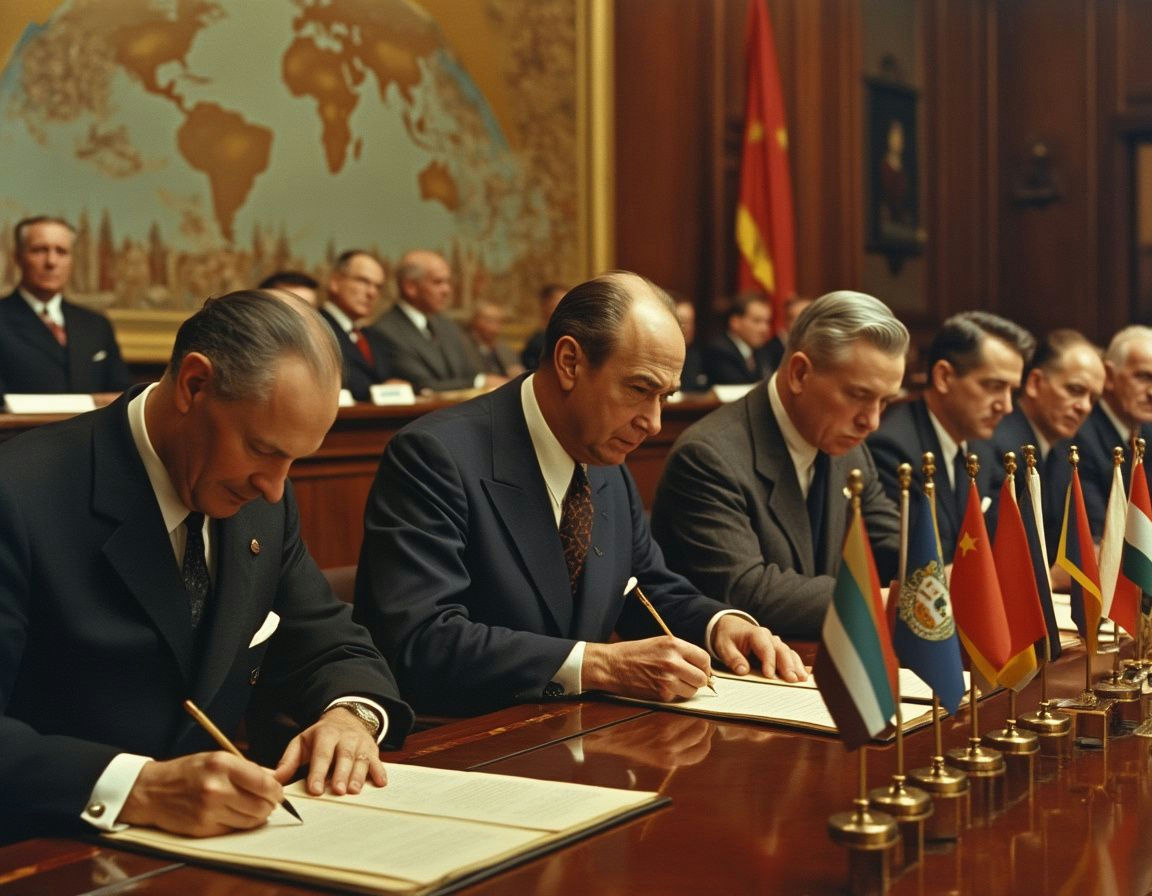
On this day in 1946, Winston Churchill delivered his famous 'Iron Curtain' speech at Westminster College in Fulton, Missouri, fundamentally changing the perception of Soviet actions in Europe. Although World War II had ended the previous year, the speech is often credited with marking the beginning of the Cold War.
In his address, titled 'The Sinews of Peace,' Churchill warned that an 'iron curtain has descended across the Continent,' illustrating the division between Western democracies and Eastern Soviet-controlled territories. He advocated for a strong Anglo-American alliance to counteract Soviet expansion and promote peace through unity and strength.
The speech came at a critical juncture when many in the West were grappling with the emerging realities of post-war geopolitics. It resonated deeply with audiences in both the United States and Europe, who were beginning to understand that the defeat of Nazi Germany had not resulted in the anticipated peace and stability.
Despite initial controversy, Churchill's speech clarified growing East-West tensions and underscored the importance of vigilance against the spread of Communist influence. It was a call to action for democracies around the world, defining major components of Cold War strategy and diplomacy for decades to follow.

By The Numbers
6 minutes
Approximate length of the "Iron Curtain" portion of the speech, which remains its most quoted section.
800+ attendees
Estimated audience present at Westminster College when Churchill spoke.
2,000 miles
Approximate length of the "iron curtain," stretching from the Baltic Sea in the north to the Adriatic Sea in the south.
1965
Year the speech location, Westminster College, established the National Churchill Museum.
Did You Know?
The term "Iron Curtain" was not invented by Winston Churchill.
Although Churchill popularized the phrase in his 1946 speech, the term "iron curtain" had been used decades earlier. It first appeared in a literal sense in theater productions, referencing a fireproof curtain that separated the stage from the audience. By the late 19th and early 20th centuries, writers and politicians began using it metaphorically to describe divisions in society or politics. However, Churchill's use of the term to describe the East-West divide during the Cold War cemented its place in history.